You have successfully logged out.

Zaawansowana technologia powierzchni

Twoja szansa na lepsze wyniki w artroplastyce stawu kolanowego

Technologia Advanced Surface (AS) to innowacyjna wielowarstwowa, unikalna na rynku powłoka implantów kolanowych. Dzięki ulepszonym właściwościom mechanicznym oraz doskonałym wynikom w zakresie biokompatybilności stanowi skuteczne rozwiązanie wspierające redukcję powikłań zarówno w zabiegach pierwotnych, jak i rewizyjnych. 

Jesteś osobą wykonującą zawód medyczny lub prowadzącym obrót wyrobami medycznymi?

Zgodnie z obowiązującymi przepisami prawa, oświadczam, że jestem osobą wykonującą zawód medyczny lub prowadzącym obrót wyrobami medycznymi. Mam świadomość, że treści zamieszczane na niniejszej stronie mogą zawierać między innymi wiadomości na temat wyrobów niebezpiecznych dla zdrowia i bezpieczeństwa pacjentów.

Potwierdź Jestem profesjonalistą z branży medycznej. Anuluj Nie jestem profesjonalistą z branży medycznej.
Tabela wyników: Powłoki wielowarstwowe a jednowarstwowe

 Powierzchnia ceramiczna

Warstwa wierzchnia wykonana jest z azotku cyrkonu, twardego materiału ceramicznego. Zapewnia wyjątkowo wysoką odporność na ścieranie. Twarda powierzchnia zwiększa odporność na zarysowania [2] i zapewnia mniejsze ścieranie polietylenu.

5 warstw przejściowych

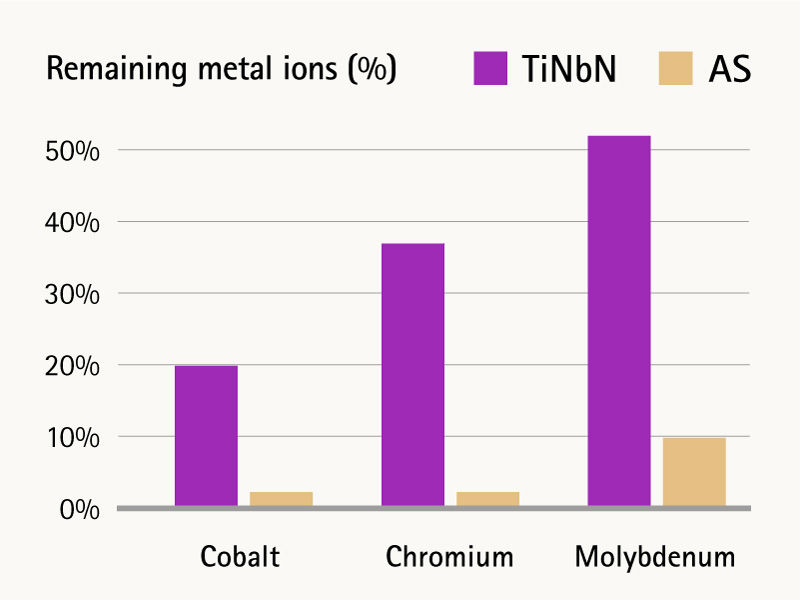
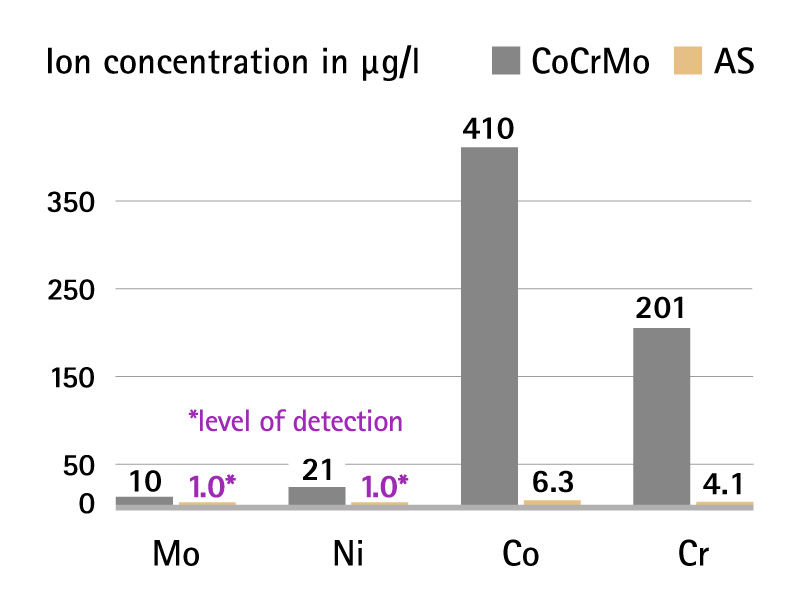
Pięć warstw przejściowych zapewnia stabilność i tworzy efekt bariery. Warstwy te zapobiegają uwalnianiu jonów metali i pomostują różnice twardości.

Powłoka klejąca

Ta warstwa kleju zapewnia stabilne połączenie między implantem a kolejnymi warstwami powlekanymi.

Powłoka wielowarstwowa

Poprawa struktury molekularnej układu warstwowego. Dzięki wielowarstwowej strukturze Advanced Surface powłoka jest bardzo elastyczna i zapobiega powstawaniu efektu skorupki jaja - nawet w ekstremalnych warunkach.

“Robię wszystko, co w mojej mocy, aby zapewnić zadowolonym pacjentom dobre długoterminowe wyniki - więc stosowanie implantów Advanced Surface Technology jest dla mnie logiczną konsekwencją. Technologia wielowarstwowa kompensuje zmiany twardości powierzchni i zapewnia bezpieczną barierę przed uwalnianiem jonów metali”

Ronald Gardner, MD, Gardner Orthopaedics, Fort Myers, USA

Wykres: Mniejsze uwalnianie jonów metali

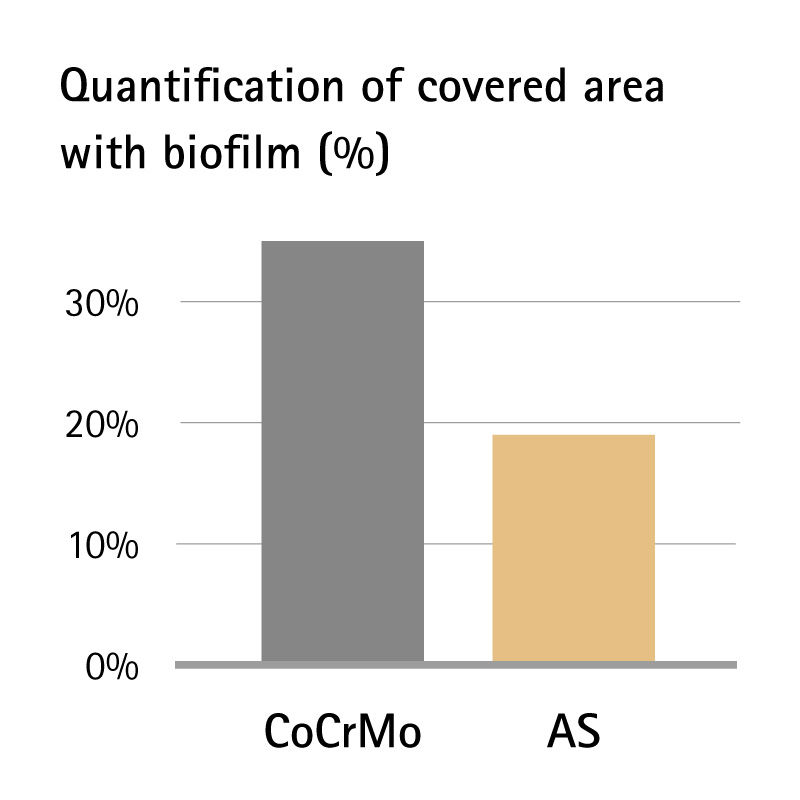
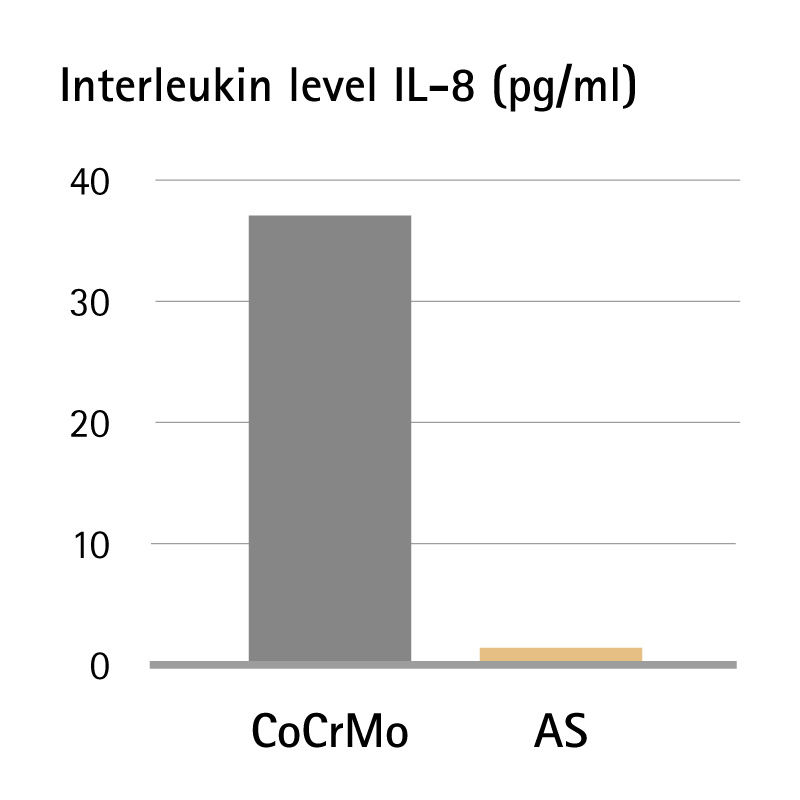
Wykres: Ograniczone tworzenie biofilmu

  • 0%

    Implanty stawu kolanowego z zaawansowaną technologią powierzchni wykazują do 88% mniejsze zużycie w porównaniu z protezami wykonanymi ze stopu CoCrMo.9

  • 0%

    Beta PE zapewnia 70% redukcję poziomów utleniania. [10]

Columbus®

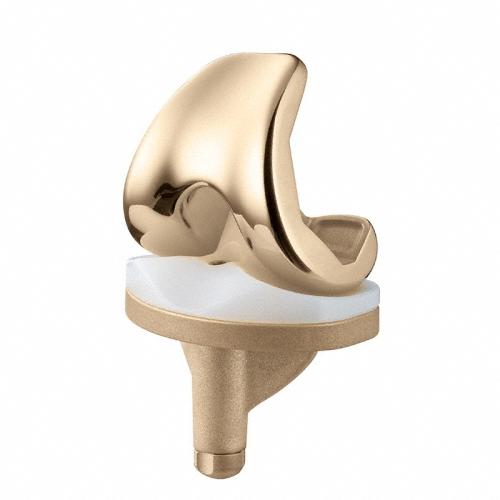
The interchangeable and anatomically-designed Columbus® Knee prosthesis offers proper physician choice and patient specificity. Columbus® has comprehensive options to cover all bicondylar indications and intraoperative situations. Discover universality – Discover individualityImplant to conserve or sacrifice the posterior cruciate ligamentFixed or rotating platformCemented or cementless with Plasmapore® (for AS version, the Plasmapore® coating is only available as custom made implant)Tibial Augmentation options and tibial stemsPE heights up to 20 mmExtensive size options with 14 femur sizes and 11 tibia sizesAS coated version for optimized wear and patients with metal allergy Discover mobility – Discover stabilityROM up to 140°Improved stability even in difficult ligament situationsTrochlea design supports natural patella tracking Discover quality – Discover innovationsGood clinical performanceNavigated or manual operating techniqueMinimally invasive or conventional operating techniqueWear results down to below 1 mg per million cycles acc. to ISO 14243Two decades of successWith over 650,000 implantations in 43 countries all over the world, Columbus® is our most established knee system. Well proven in 54 publications with 98% survival rate after 10 years in studies.[1] Fantastic results in the English, Australian and German national joint registry.[2-4]20 years Columbus®. 20 years of excellent outcomes. We are proud of it.

Columbus® Revision

Today revision surgery represents already around 15 percent of knee replacement surgeries. Due to more and more earlier implantations and more severe bone defects, the numbers continuously rise. Based on the very successful design of the Columbus® knee endoprostheses, the development of the Columbus® Revision System was just a logic consequence.The new developed revision system is characterized by:Small production tolerancesPrecision of the cutsDemand-oriented implant portfolioLow PE wearManual or OrthoPilot navigated CT-free surgical techniqueImplants in CoCr or also as Advanced Surface (AS) version available

VEGA System®

The posterior stabilized VEGA Knee System was developed to fulfill the modern-day requirements of patient and surgeons for a modern knee implant system. The following objectives were considered in its design: Natural kinematics through a rollback and a pivotal motion around the medial condyleDuring flexion, the natural knee shows increased rollback of the femur on the lateral side while the femur rotates around the medial center.[1] The asymmetric cam design of VEGA facilitates this lateral rollback and medial rotation, and therefore enables a natural pivotal motion.[2] Stability even in high flexion Based on the design and the position of the PS box and post, the contact point of the box and post move distally with an increase of flexion. Therefore the increased jumping distance in flexion can reduce the subluxation risk. The synchronized contact surfaces between the articulating components maximize the bearing surface stress distribution in extension, reducing the risk of delamination. The high congruency between femur and tibia in extension as well as the line contact up to 160° of flexion stabilizes the patient’s movements and reduces wear. To reach higher varus-valgus stability a PS+ gliding surface with a mediolaterally wider PS post is available. Posterior inclination of the post design prevents anterior impingement with the extensor mechanism and increases resistance to dislocation. Soft tissue friendly and bone sparing implant design [2] Besides the reconstruction of natural kinematics, two attributes were in the foreground during the development of the VEGA Knee System. A soft tissue friendly design as well as the reduction of bone loss. 13 femur sizes, including standard and narrow sizes, and 11 tibial sizes, including standard and AP+ sizes, offer a wide range for a better bone fit regardless of gender, size, morphotype or race. Additionally, the VEGA System®’s narrow low-profile box helps to preserve bone and results in stable patellar tracking. A short tibial stem design as well as slim tibial wings support the bone sparing philosophy of VEGA. Furthermore the curved wing design facilitates a high rotational stability. Long-term performance through innovative materials  Advanced Surface: Wear is the number one reason for long-term knee replacement revisions.[3] To combat this issue, the AS coating can deliver up to a 65 % reduction in wear when compared to a CoCr prosthesis, as demonstrated in testing with other Aesculap knee designs. Furthermore, with the AS coating metal ion concentrations remain low and are below any biological threshold. This makes the AS coated implants an ideal solution for patients who are allergic to metal. The AS multilayer coating reduces the hardness from top to bottom in a gradient-like fashion, resulting in an improved elastic modulus. This makes it stable against mechanical stresses and strains.[4-7]Beta Polyethylene: All of Aesculap’s polyethylenes are sterilized under Beta radiation, which reduces oxidation, decelerates the aging process, and yields better wear rates.[8-10] Easy handling and precise results with the new generation of IQ instruments as well as the OrthoPilot® Navigation SystemPatient specific with OrthoPilot® NavigationUser-friendly with IQ Instruments

EnduRo

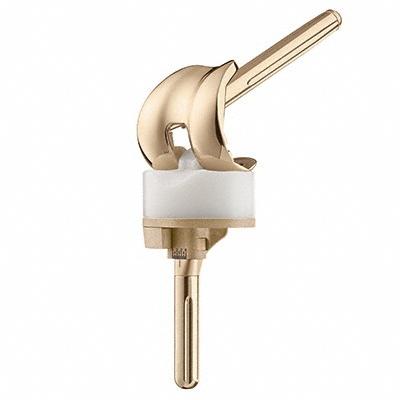
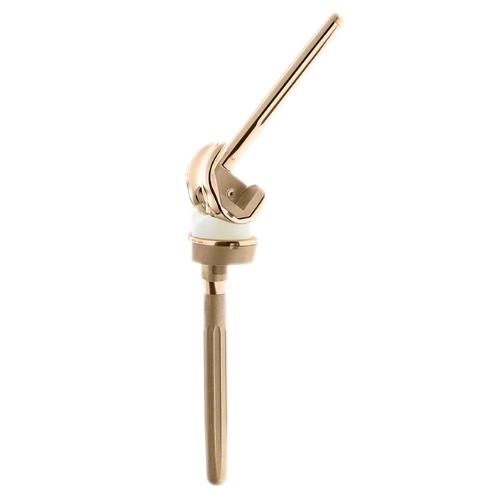
Due to today's growing demographic situation, revision operations will continue to play a significant role in the future. The particular challenges of hinged implant revisions require an implant that performs the functions of the collateral ligamentous apparatus without restricting essential joint functions such as flexion and rotation.The EnduRo system offers this flexibility with 24° rotation and a flexion angle of up to 140°. The sophisticated lift technology of the axis mechanism supports the axis while preventing dislocation and allowing for insertion of the tibial stem offset near the jointline. The axis is coupled with the femoral component through a tapered cone and is equipped with a locking nut to prevent dislocation.An extensive product portfolio including various implant sizes, augments, stem extensions and gliding surfaces gives the surgeon the flexibility to adapt the implant to the patient. The EnduRo system is based on the use of proven cobalt-chromium-molybdenum components in combination with carbon fiber reinforced PEEK for the materials of the axis-bearing components. Promising in-vitro results have indicated that and increased longevity of these implant components can be expected [1]. In addition, the optional AS Advanced Surface version can reduce the release of metal ions and improve wear behavior, which was demonstrated during in-vitro experiments [2-5]. Precise implementation of the preoperative planning in the operating room is essential for the success of the procedure. The EnduRo instruments are designed to support just that and enable reproducible surgical procedures for the physician and the team.

“W związku z tym byłem kandydatem na protezę stawu kolanowego i wybrałem zaawansowaną technologię powierzchniową, którą stosuję u każdego pacjenta. Dlaczego powinienem używać mniejszego elementu dla moich pacjentów?”

Ronald Gene Hood, MD, St. Francis Health System, Muskogee, USA

Powiązane dokumenty

Skontaktuj się z naszymi ekspertami

Thank you very much for your request!

check_circle

Zostanie ono przekazane odpowiedniej osobie, która skontaktuje się z Tobą tak szybko, jak będzie to możliwe.

Your request could not be submitted. Please try again.

warning

Materiały źródłowe

  1. Ragone V, Canciani E, Biffi CA, D'Ambrosi R, Sanvito R, Dellavia C, Galliera E. CoCrMo alloys ions release behavior by TiNbN coating: an in vitro study. Biomed Microdevices. 2019 Jul 4;21(3):61.
  2. Reich J, Hovy L, Lindenmaier HL, Zeller R, Schwiesau J, Thomas P, Grupp TM. Präklinische Ergebnisse beschichteter Knieimplantate für Allergiker [Preclinical evaluation of coated knee implants for allergic patients]. Orthopade. 2010 May;39(5):495-502.
  3. Schäfer T, Böhler E, Ruhdorfer S, Weigl L, Wessner D, Filipiak B, Wichmann HE, Ring J. Epidemiology of contact allergy in adults. Allergy. 2001 Dec;56(12):1192-6.
  4. Hallab N, Merritt K, Jacobs JJ. Metal sensitivity in patients with orthopaedic implants. J Bone Joint Surg Am. 2001 Mar;83-A(3):428-36.
  5. Pilz M, Staats K, Tobudic S, Assadian O, Presterl E, Windhager R, Holinka J. Zirconium Nitride Coating Reduced Staphylococcus epidermidis Biofilm Formation on Orthopaedic Implant Surfaces: An In Vitro Study. Clin Orthop Relat Res. 2019 Feb;477(2):461-466.
  6. Thomas P, Hisgen P, Kiefer H, Schmerwitz U, Ottersbach A, Albrecht D, Summer B, Schinkel C. Blood cytokine pattern and clinical outcome in knee arthroplasty patients: comparative analysis 5 years after standard versus "hypoallergenic" surface coated prosthesis implantation. Acta Orthop. 2018 Dec;89(6):646-651.
  7. Sadoghi P, Liebensteiner M, Agreiter M, Leithner A, Böhler N, Labek G. Revision surgery after total joint arthroplasty: a complication-based analysis using worldwide arthroplasty registers. J Arthroplasty. 2013 Sep;28(8):1329-32
  8. Australian National Joint Replacement Registry 2022.
  9. Grupp TM, Giurea A, Miehlke RK, Hintner M, Gaisser M, Schilling C, Schwiesau J, Kaddick C. Biotribology of a new bearing material combination in a rotating hinge knee articulation. Acta Biomater. 2013 Jun;9(6):7054-63.
  10. Blömer W, Lohrmann E. Verschleißbeständigkeit von UHMWPE-Artikulationen in der Hüftgelenksendoprothetik. In: Weller S, Braun A, Eingartner C, Maurer F, Weise K, Winter E, Volkmann R. Das BICONTACT Hüftendoprothesensystem 1987-2007. Stuttgart: Georg Thieme Verlag; 2007. p. 94-100.
  11. Australian Orthopaedic Association National Joint Replacement Registry (AOANJRR). Hip, Knee & Shoulder Arthroplasty: 2021 Annual Report, Adelaide; AOA, 2021: 258.
  12. Lützner J, Beyer F, Lützner C, Tille E, Postler AE. A Novel Multilayer-Coating for Total Knee Arthroplasty Implants is Safe – 10-Year Results From a Randomized-Controlled Trial. J Arthroplasty. 2023 Jan;38(1):90-95.e1.
  13. Whiteside LA. Clinical Results of Revision TKA in Patients With Presumed Metal and Cement Allergy. J Arthroplasty. 2022 Jun;37(6S):S250-S257.
  14. Puente Reyna, A. L., Fritz, B., Schwiesau, J., Schilling, C., Summer, B., Thomas, P., & Grupp, T. M. (2018). Metal ion release barrier function and biotribological evaluation of a zirconium nitride multilayer coated knee implant under highly demanding activities wear simulation. Journal of biomechanics, 79, 88–96. https://doi.org/10.1016/j.jbiomech.2018.07.043
  15. Australian Orthopaedic Association National Joint Replacement Registry (AOANJRR). Hip, Knee & Shoulder Arthroplasty: 2020 Annual Report, Adelaide; AOA, 2020: 1-474. [Accessed from: https://aoanjrr.sahmri.com/annual-reports-2020]
  16. Bormann, T., Kraenzler, S., Jaeger, S., Kluess, D., Mittelmeier, W., Renkawitz, T., & Kretzer, J. P. (2023). Stability of ceramic coatings on retrieved knee prostheses. Journal of the mechanical behavior of biomedical materials, 144, 105997. https://doi.org/10.1016/j.jmbbm.2023.105997